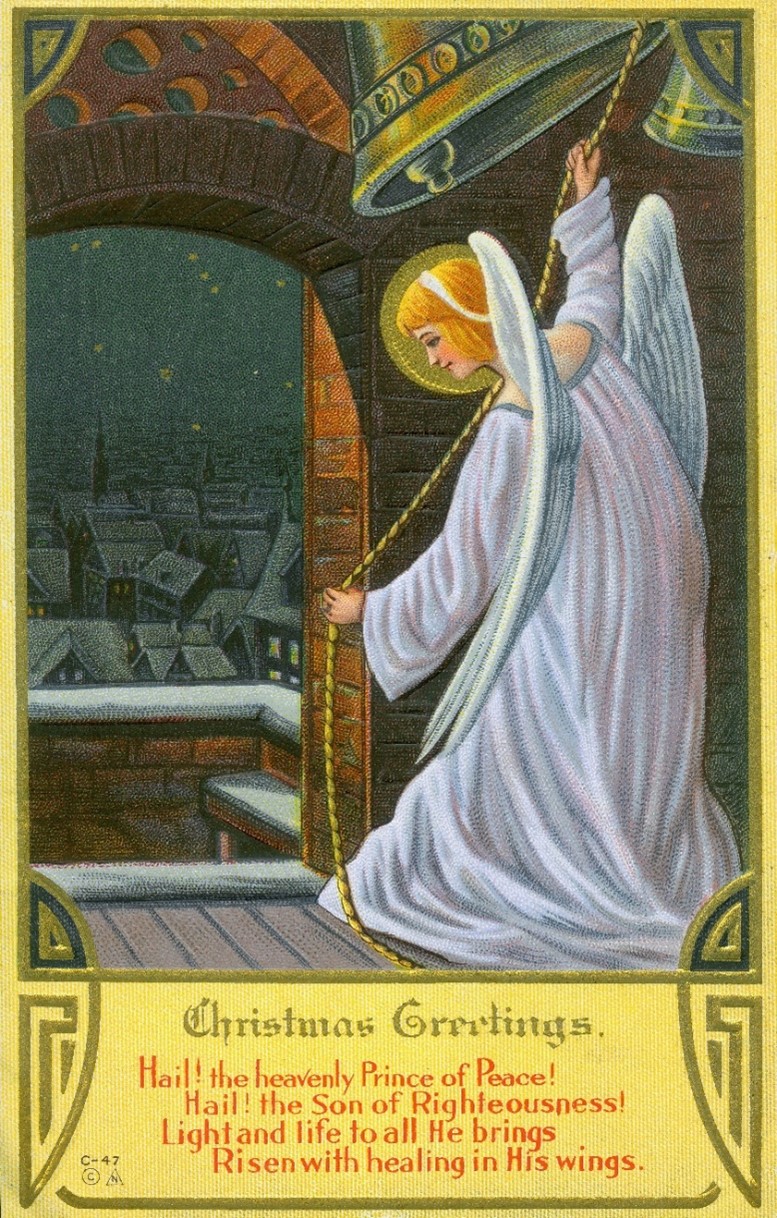
Bells are among the most popular and familiar symbols and sounds associated with Christmas. We hang bell decorations on our trees and doors, and they feature regularly on Christmas cards and Christmas wrapping paper. Bells are either mentioned or are the central theme in many Christmas carols and hymns: Ding Dong Merrily on High, Silver bells, Bells are ringing, Jingle Bells, and the Carol of the Bells (featured in the movie Home Alone 1), which is based on an old Ukrainian folk song Shchedryk. Christmas bells are the central theme in Tennyson’s poem In memoriam. After writing A Christmas Carol Dickens spent the following year in Italy. He was apparently so inspired (and also frustrated) by the church bells that the next book in his series of Christmas books was titled The Chimes.
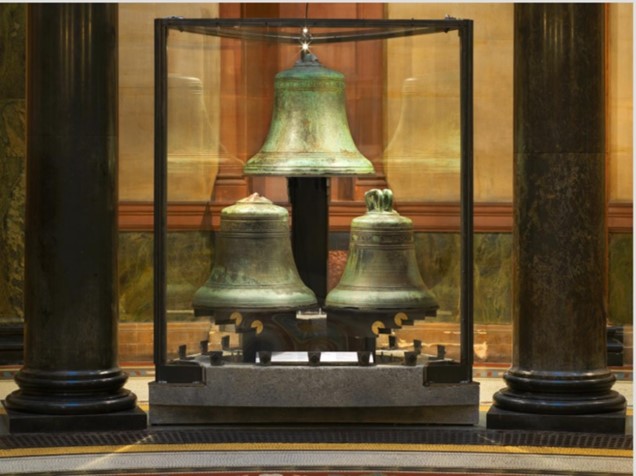
In the Christian tradition church bells ring out joyfully on Christmas eve and on Christmas day to announce and celebrate the birth of Jesus Christ. It is therefore only fitting to choose the three bronze late medieval bells which originally hung in the bellcote in St Mary’s Abbey in Howth, Co. Dublin for this year’s Christmas blog.
The bells are a relatively recent acquisition and were kindly donated to the Museum by the late Christopher Gaisford-St Lawrence of Howth Castle in January 2022. The bells are among the most significant and exceptional objects from this period in the Museum’s medieval collections. They probably date to the fifteenth century. Although bells once rang out in almost every bellcote and belltower in the country, very few have survived today. Most have been either recast or melted down, and apart from the Howth bells, only six other late medieval bells exist today: three in St Audeon’s, Dublin, one in St Pappins, Santry, Dublin and two in Holy Cross Abbey, Roscrea, Co. Tipperary.
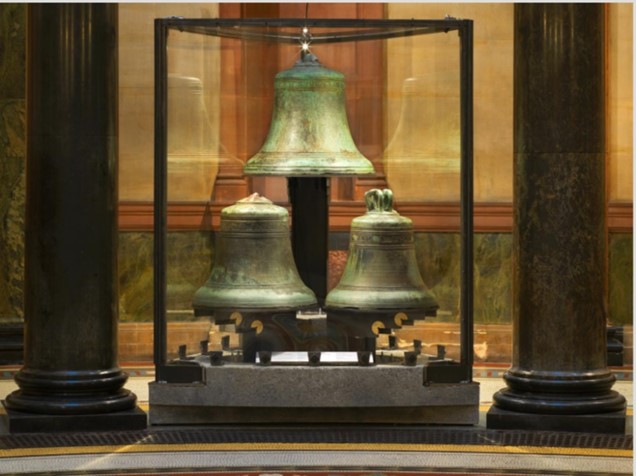
The Howth Bells on display in the Museum in Kildare Street. (©The National Museum of Ireland)
The Howth bells are reputed to have been commissioned by the St Lawrence Family, who came to Ireland at the beginning of the Norman conquest at the end of the twelfth century. They were granted the lands of Howth. When St Mary’s Abbey was abandoned and fell into disrepair the bells were taken into the care of the St Lawrence family and were stored in the vaults at Howth Castle. They remained there until 1853 when they were moved to Leinster House to be included in the Great Industrial Exhibition. They were later returned to Howth Castle and remained there on the veranda of the castle until January 2022 when they were finally deposited with the National Museum.
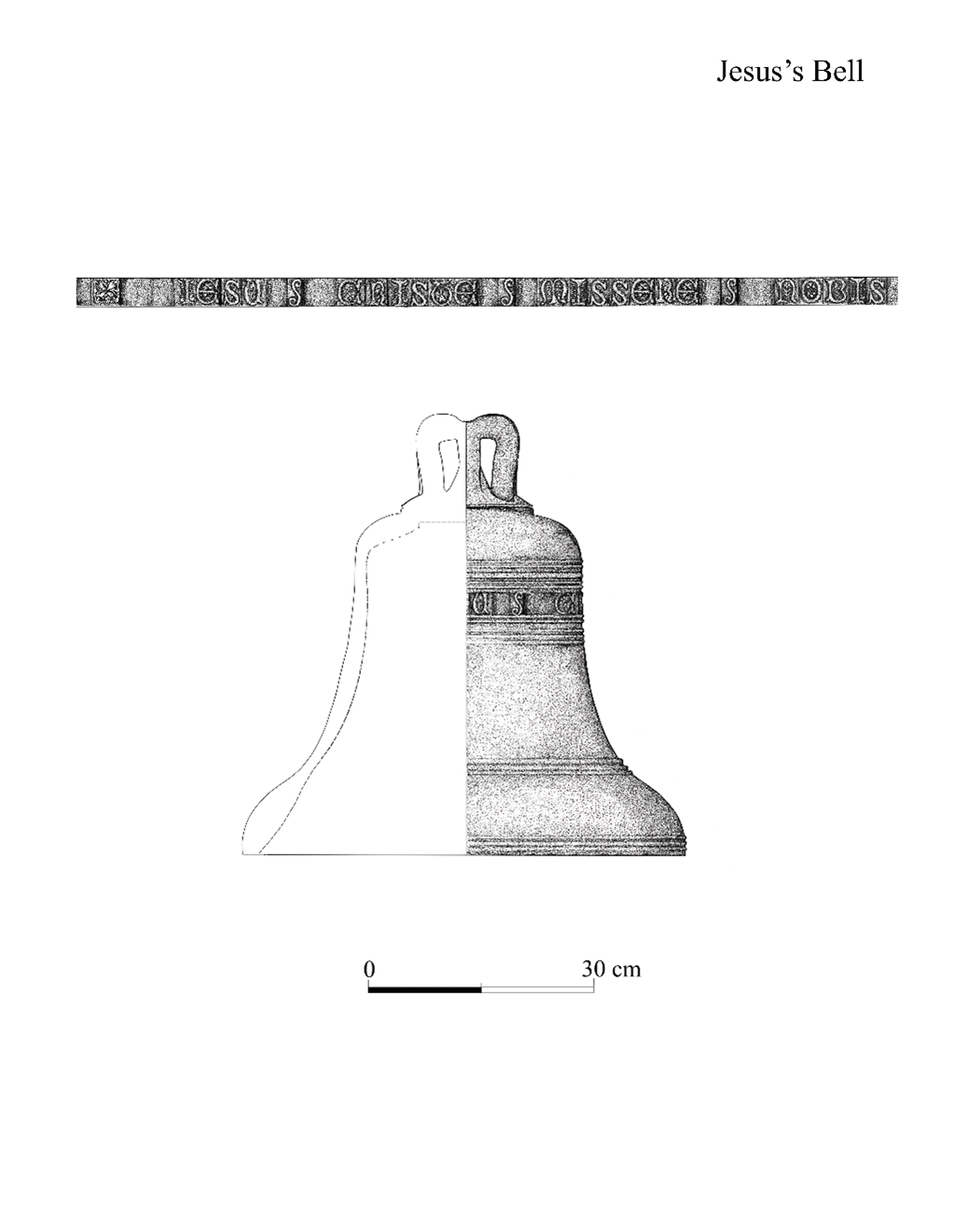
The Latin inscriptions on the Howth bells tell us to whom the bells are dedicated: St Mary, Jesus Christ and Nicholas.
.png "Picture3-(1).png")
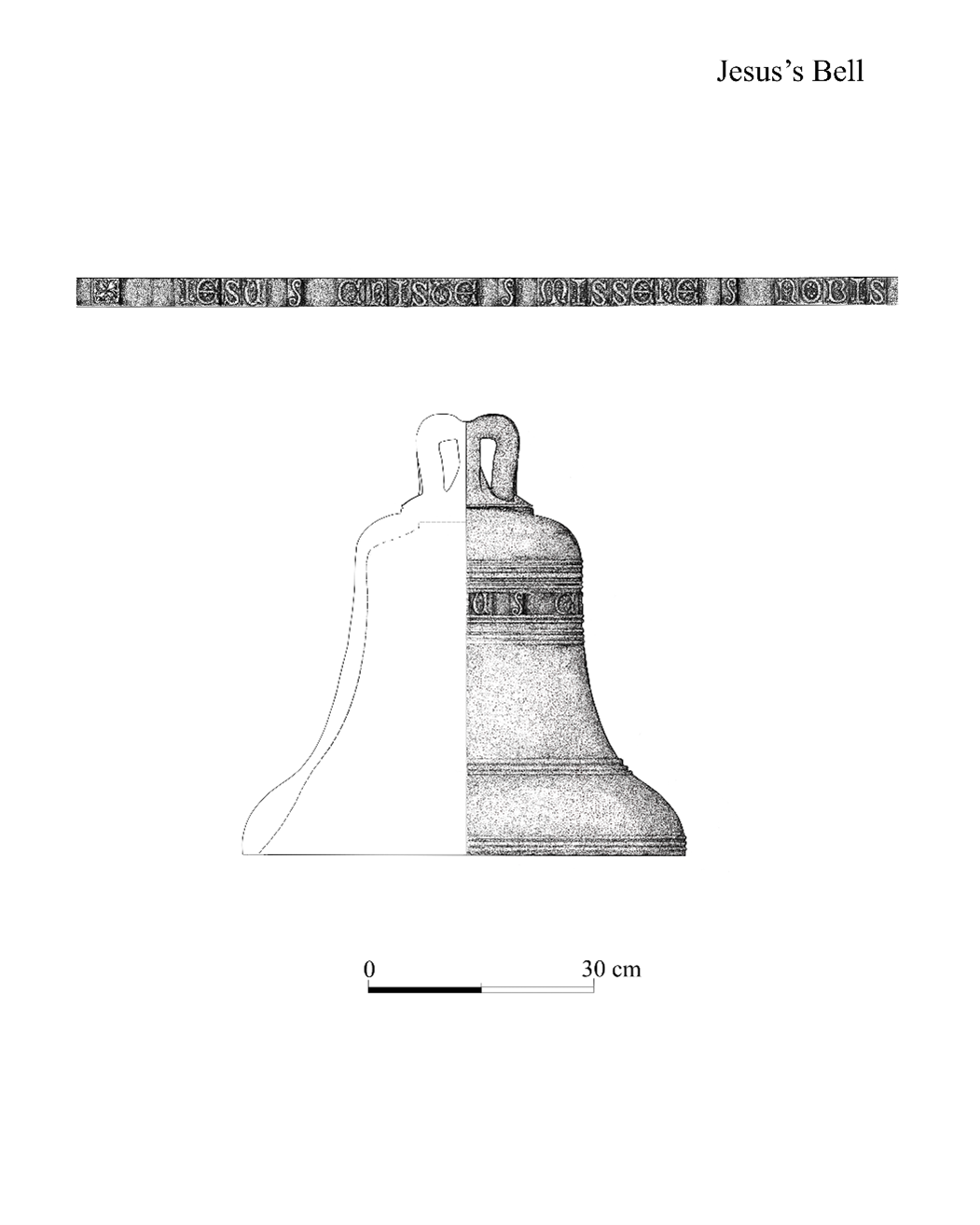
Jesus - IESUS*CRISTE*MISSERERE*NOBIS – Jesus Christ have mercy on us
Drawing of the Jesus Christ Bell (by Aurora Potenza)

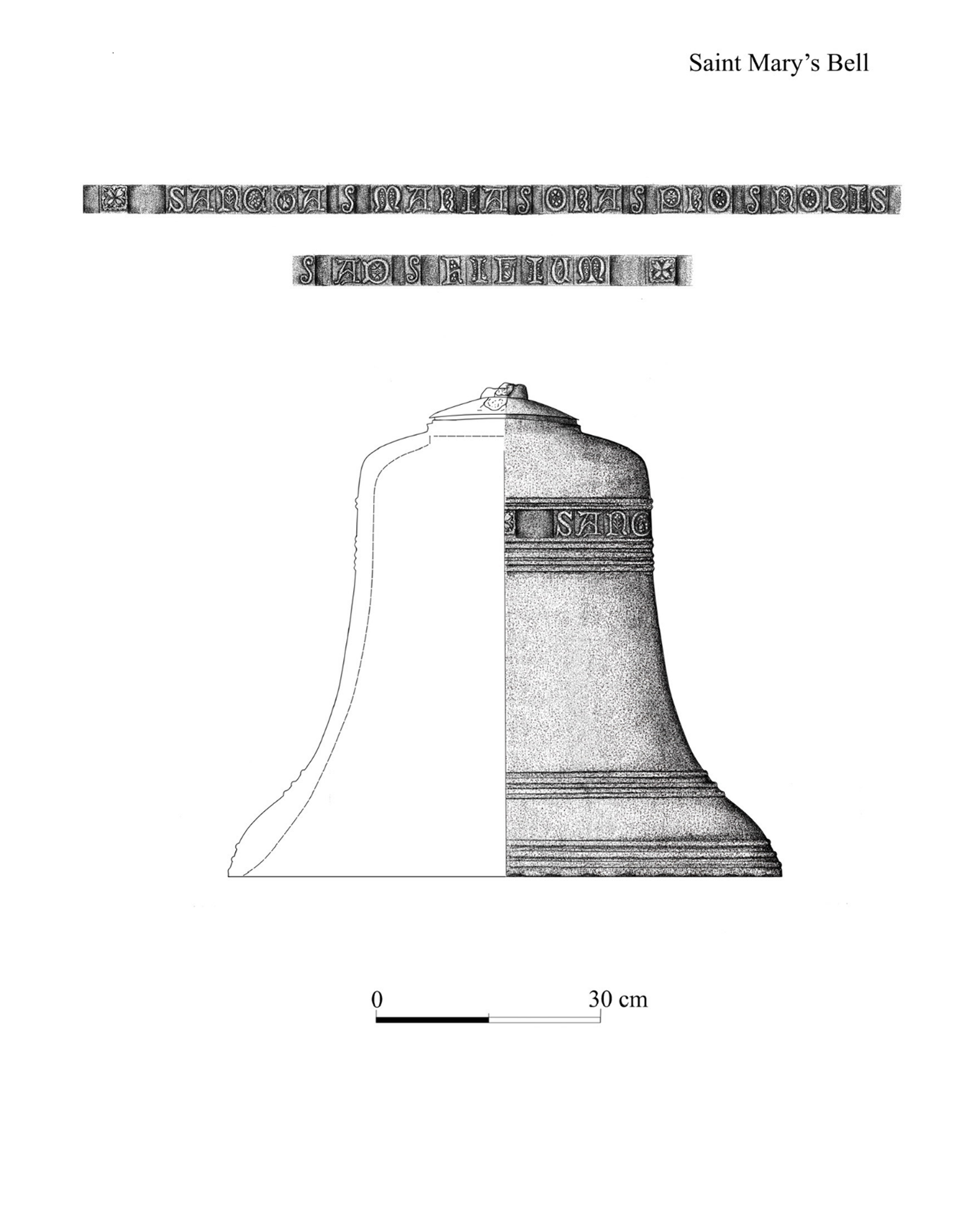
St Mary – “SANCTA MARIA PRO NOBIS AD FILIUM +” [Pray} for us Mary to your Son
Drawing of the St Mary Bell (by Aurora Potenza)
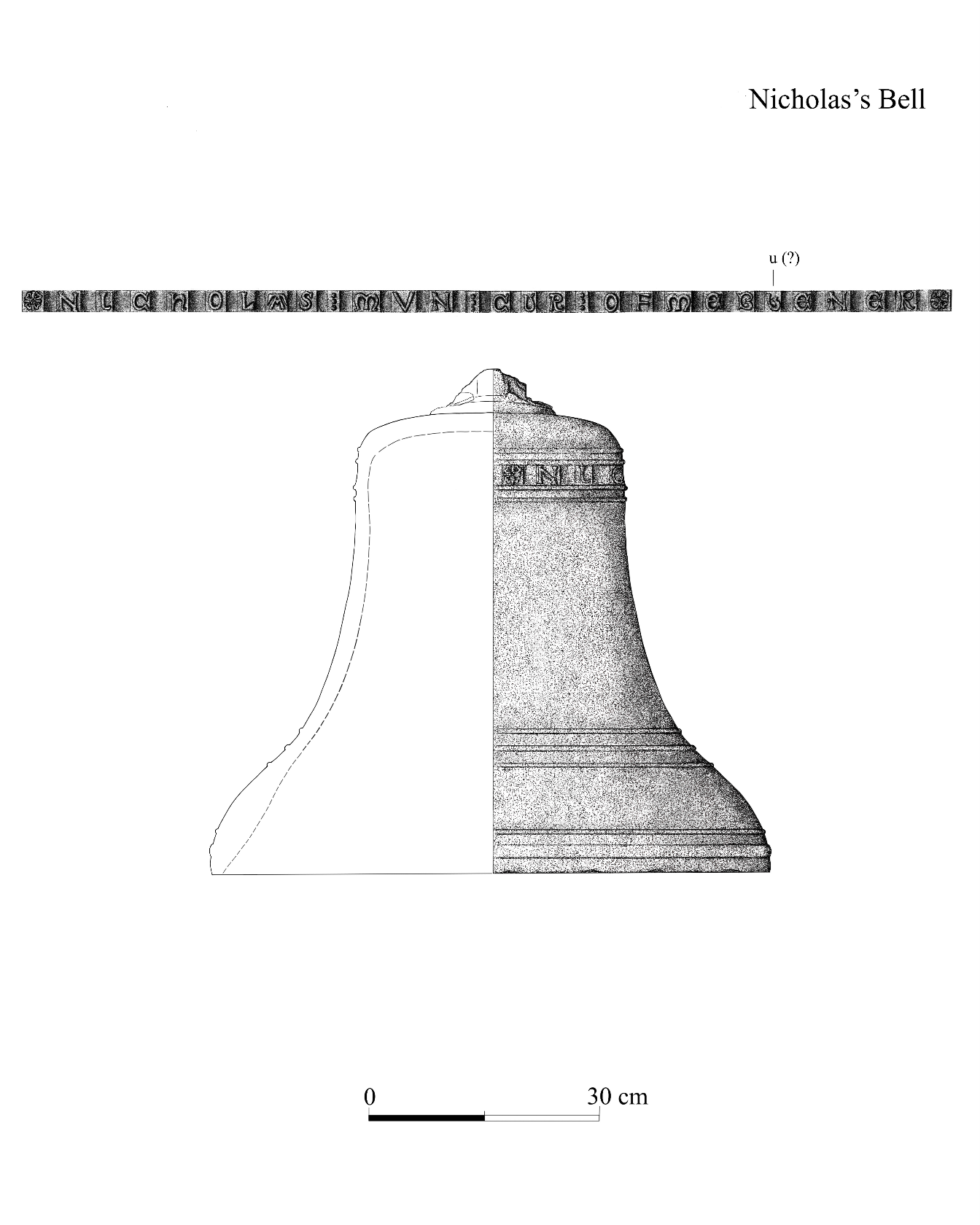
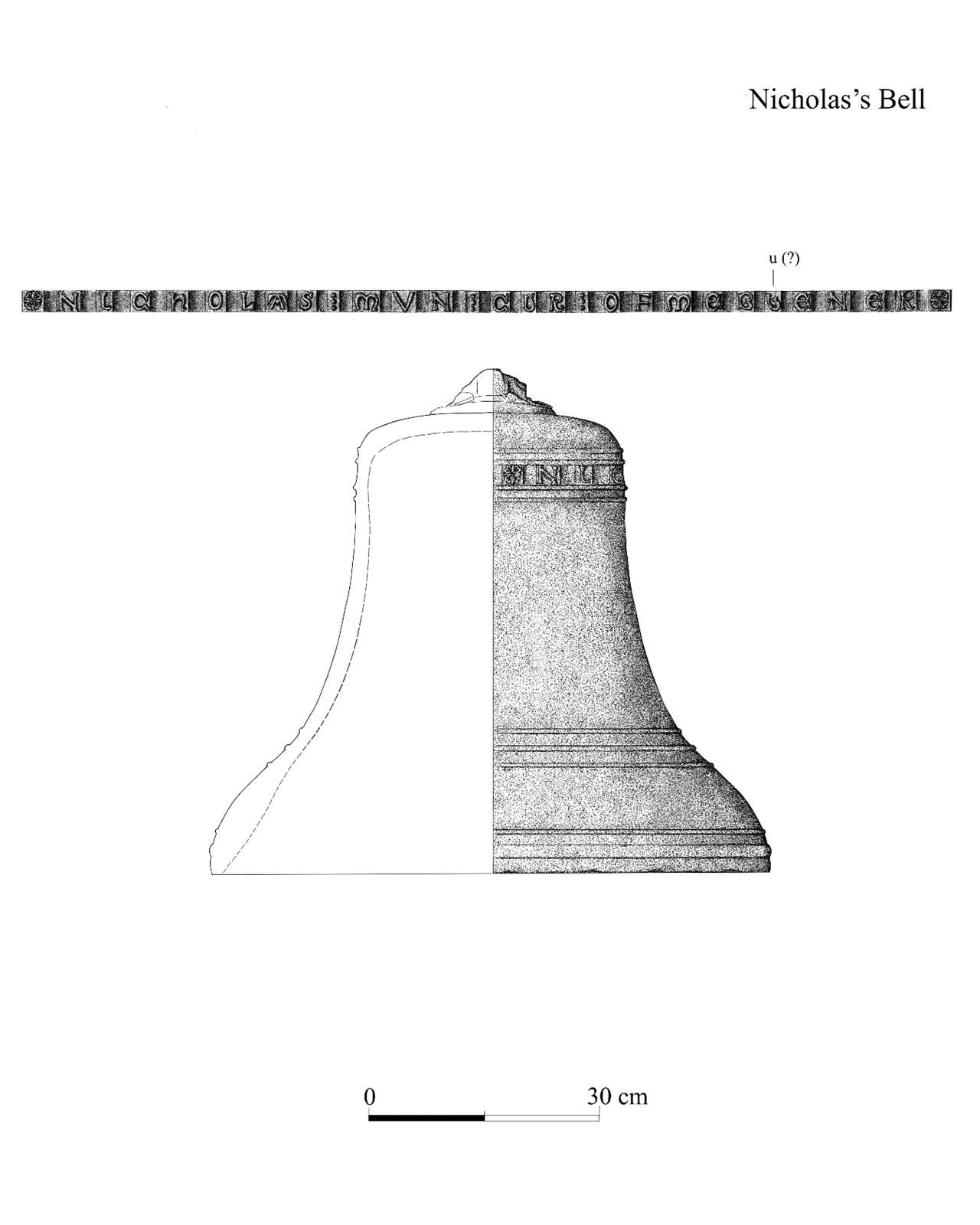
Nicholas – “NICHOLAS: MVN: CVR: OFMEBEGINER” Nicholas: municipality: curator: Of me beginner (OFMEBEGINER is Middle English and literally means ‘began me’ but perhaps really refers to Nicholas commissioning the bells to be made)
Drawing of the Nicholas Bell (by Aurora Potenza)
‘The Nicholas bell’ is not dedicated to St Nicholas, more commonly known as Santa Claus, but is probably dedicated to Sir Nicholas St Lawrence, 3rd Baron of Howth (died 1526), who received 300 gold pieces for remaining loyal to Henry VII during the Lambert Simnel affair. With these gold pieces Sir Nicholas may have funded the casting of the Nicholas bell. He may also have used the funds to contribute to the 16th century building refurbishments on St Mary’s Abbey.
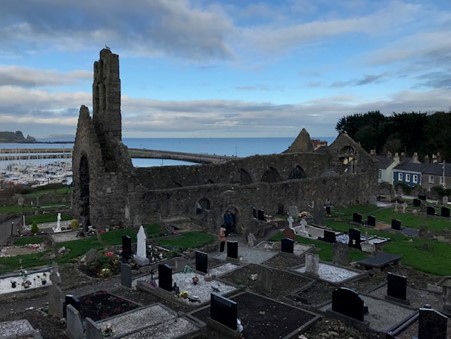
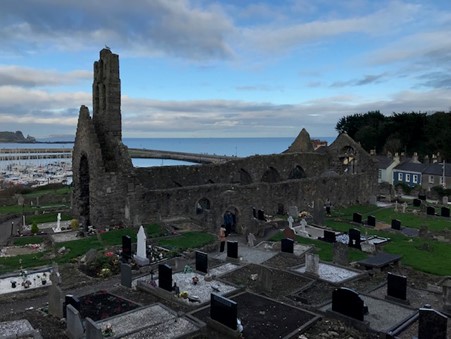
St Mary’s Abbey Howth, Co. Dublin showing the bellcote where the three bells once hung (photography by Sharon Weadick)
In medieval times the bells would have sounded the canonical hours, the death of a member of the community or warned of incoming storms. They were also rung to celebrate feast days, such as Christmas and the New Year. Socially and spiritually, they would have been at the heart of the community in Howth and their historical association with St Mary’s Abbey and the Howth peninsula and the Gaisford-St Lawrence family will always be important.
Merry Christmas and a Happy New Year
Nollaig shona agus athbhliain faoi mhaise daoibh
Reference: https://commons.wikimedia.org/wiki/File:Christmas_Greetings._(Angel_ringing_a_bell_overlooking_a_village).jpg
.jpg)