Objects from the Irish Antiquities Division in the landmark exhibition Celtic Art Across the Ages at the Harvard Art Museums.
Objects from the Irish Antiquities Division take to the global stage in the landmark exhibition Celtic Art Across the Ages at the Harvard Art Museums, Cambridge, Massachusetts, running from March to August 2026. The reason this is a landmark exhibition is because it is the first major show in the United States dedicated to Celtic art and brings together nearly 300 objects from museums and collections across Europe and North America. It not only explores Celtic art across space, but it also traces it across time over roughly 2500 years, from the Iron Age through the early medieval period and into the modern Celtic Revival of the 19th and 20th centuries, illustrating how artistic traditions evolved while maintaining distinctive cultural characteristics. Ireland features prominently in this narrative.The objects from the Collections of the Irish Antiquities Division are displayed alongside renowned European objects such as the Heidelberg stone head and the Torrs pony cap. Displaying Irish objects alongside material from Scotland, Britain, France, Germany, Switzerland, Austria, and Italy allows visitors to see the connections and exchanges between different Celtic-speaking and Celtic-influenced regions. This exhibition shows that Celtic art was never a single, uniform tradition but rather it emerged over time through centuries of interaction and cultural exchange across Europe.
Among the objects on display from the Irish Antiquities collection is a group of objects known locally as the Metalworkers Hoard. Discovered in a field in Somerset, Co. Galway between 1958 and 1992, the Somerset Hoard comprises a gold twisted torc, a bronze box, mounts, fibula, handle, part of a Y-shaped pendant along with an ingot and part of a bronze sheet (Fig. 1). The box and gold torc form part of the permanent Treasury exhibition in the Archaeology museum Kildare Street, but at Harvard Art Museums the hoard is on public display together for the first time ever in its entirety.

Fig. 1 The Somerset Hoard from County Galway (Reg 1958:156-164, 1959:702; 1992:63-64)
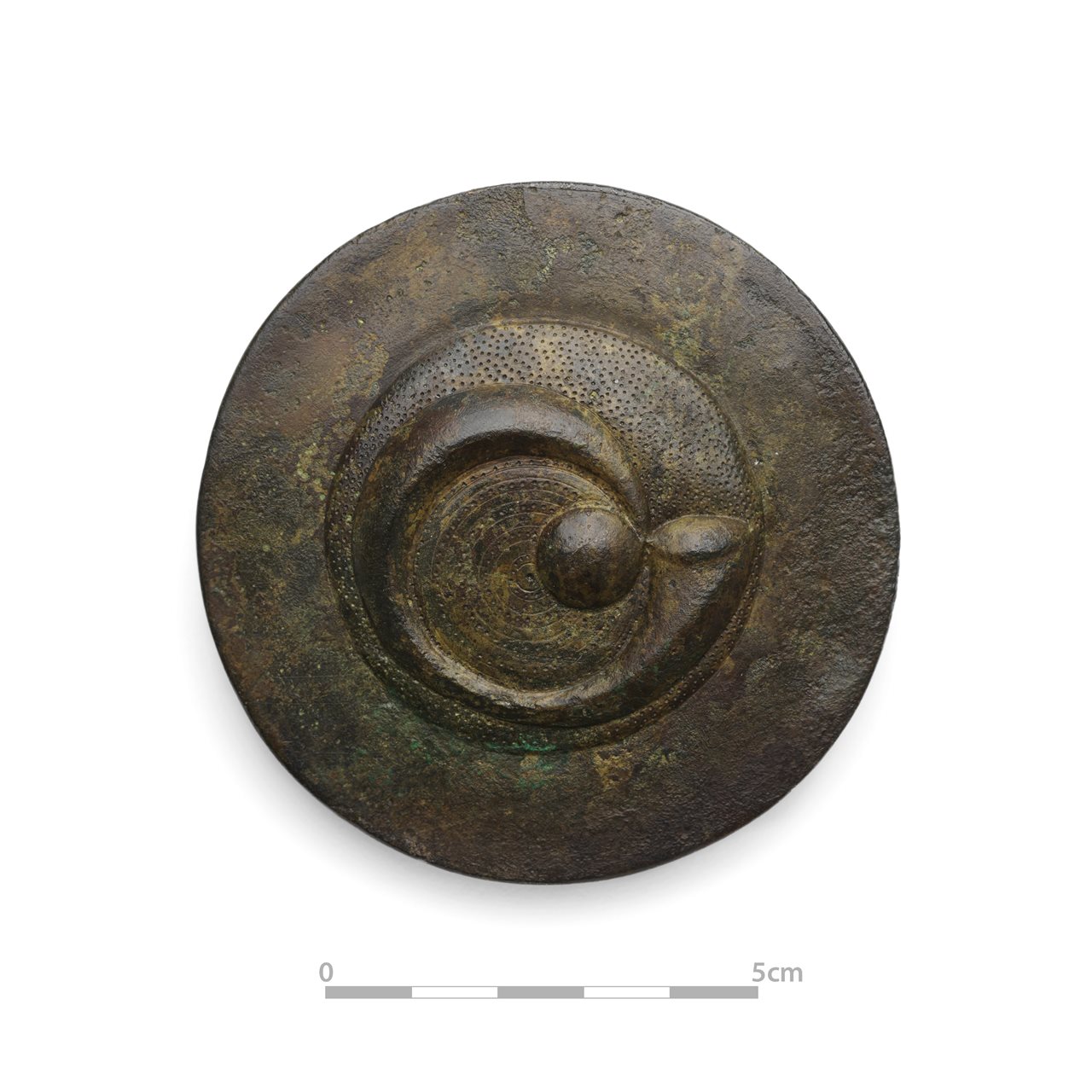
The hammered bronze box lid is decorated with repoussé ornament comprising a trumpet-and-lentoid spiral which curls onto itself to enclose a central boss. Concentric, compass drawn arcs fill the inner space within the coil of the trumpet (Raftery 1983).

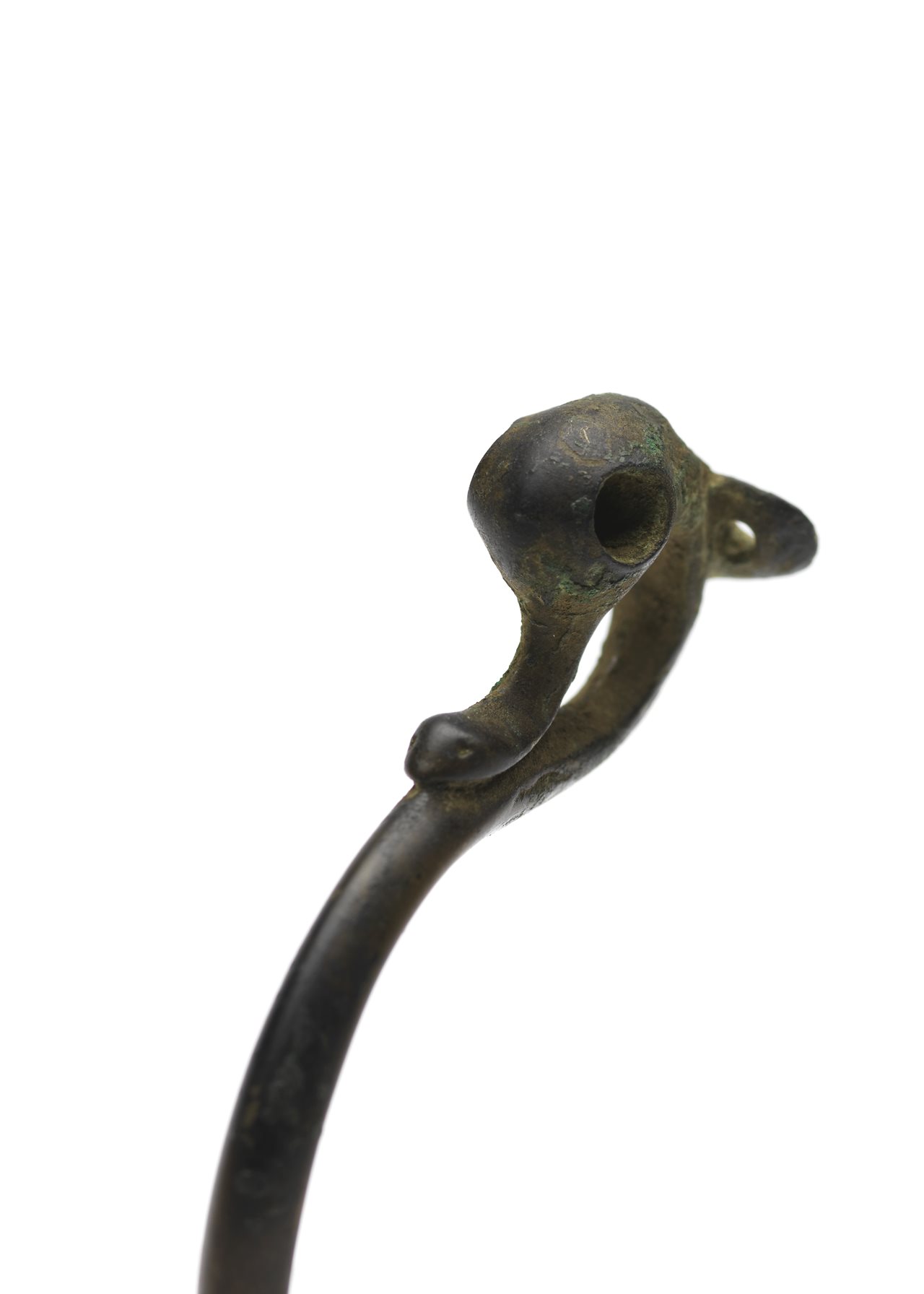
Fig 2. The Somerset box lid (1958:157) and handle (1958:162)
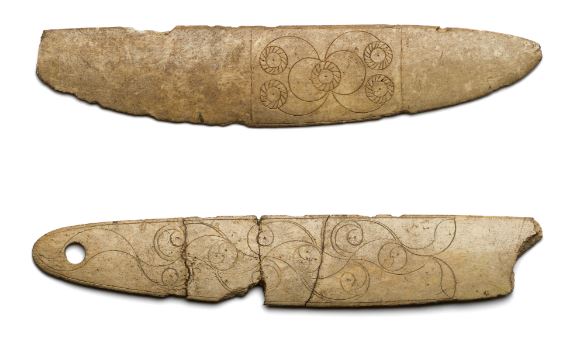
The hoard also contains a delicate C-shaped handle from a small vessel comprising a delicately cast bird’s head at one end, which presumably had glass or enamel studs for eyes, denoted by the empty sockets now in their place (Raftery 1983) (Fig.2). The ornamental designs presented in the Somerset Hoard, characterised by curvilinear forms, spirals and aspects of nature in the form of foliage and animals, are the signature of the Iron Age in Ireland in the first centuries AD and can be found on all media including the bone flakes from Loughcrew, Co. Meath (Fig 3), which are also on display in Celtic Art Across the Ages.

Fig 3. Some bones flakes from Loughcrew, Co. Meath showing spirals and scrolls (1941:166 and 1941:1222)
This ornament is not confined, as one might expect, to jewellery or ceremonial pieces but rather occurs on objects with a more practical function, prompting ideas about the interpretation of this art, how Iron Age society encountered it and what it meant. The reality is it probably meant different things to different people in different contexts. Celtic Art Across the Ages suggests that many Celtic artworks were not created simply for display but instead they were functional objects that played important roles in everyday life and ritual practice.
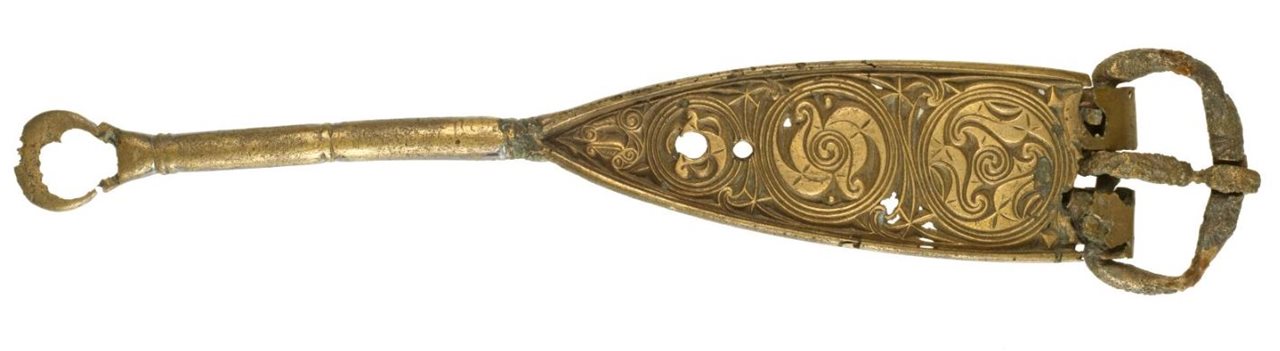
Moving on chronologically from the Iron Age, the exhibition highlights how Celtic artistic forms evolved in Ireland and Scotland during the early medieval period, influencing ecclesiastical objects, manuscripts, and decorative motifs that continue to shape perceptions of Celtic culture today. The Irish examples of this in the Harvard exhibition include the Shrine of the Soiscél Molaise (R4006) and the ornate belt buckle from the royal site of Lagore, Co. Meath (E14:213) (Fig. 4).

Fig 4. Belt buckle from Lagore, Co. Meath (E14:213)
Many public presentations of Celtic culture highlight mythology, knotwork, spirituality, and romantic imagery, but Celtic Art Across the Ages has moved beyond these familiar themes by examining archaeology, trade, warfare, daily life, encounters with the Roman world, and the later reinvention of Celtic identities.
Celtic Art Across the Ages provides a fascinating opportunity to see Ireland’s artistic heritage presented on a global stage. The exhibition offers an important international platform for Ireland’s cultural heritage and introduces American visitors to the richness and diversity of Irish artistic traditions while encouraging a deeper understanding of the historical connections that linked Ireland to wider European communities. It presents Irish objects not as isolated National treasures but as part of a rich and complex Celtic world stretching across Europe and through time.
References:
Raftery, B. 1983 A catalogue of Irish Iron Age antiquities. Marburg
Wallace, P. & O'Floinn, R. 2002 Treasures of the National Museum of Ireland: Irish antiquities. Dublin
Ebbinghaus, S. 2026 Celtic Art Across the Ages. Harvard Art Museums.