By Tim Heanue, Registration Collections Assistant, National Museum of Ireland
The emptying of the Natural History Museum at the National Museum of Ireland, Merrion Street was an incredibly complex project. It involved the movement of thousands of specimens safely to their temporary home in the Museums’ storage facility. One of the major challenges during the decant was to avoid introducing pests to our stores. This would put not just our Natural History collections at risk, but all of the National Collection objects in storage.
Pests
When thinking of pests, most people would assume mice and rats first, but our biggest concerns were with much smaller visitors. Tiny creatures such as clothes moths (Tineola bisselliella), Furniture beetle (Anobium punctatum), and especially Reesa vespulae, have the potential to cause huge damage. The dried fur, skin, and feathers of our taxidermy collection could turn our store into an all-you-can-eat buffet for pests.
Pest Management
These risks are managed in museum collections through a process known as Integrated Pest Management (IPM). This is a system of managing museum spaces to reduce the risk of pest infestations in galleries and stores. This is a wide-ranging process, which includes managing temperature and humidity in our buildings, exacting standards of housekeeping, and constant vigilance for pest activity. This process is developed and managed by our Conservation department, but it requires the support of all staff to be truly effective. In our case, IPM controls how we introduce new specimens to the store environment.
So how do we prevent unwanted guests entering the store along with our specimens? While there are several potential strategies, the most effective method to avoid pests piggybacking on our specimens is to freeze them. By freezing objects at low enough temperatures for long enough, it will kill any pests on the specimen. It also kills off any pest eggs, interrupting the lifecycle permanently.
To Freeze or Not to Freeze
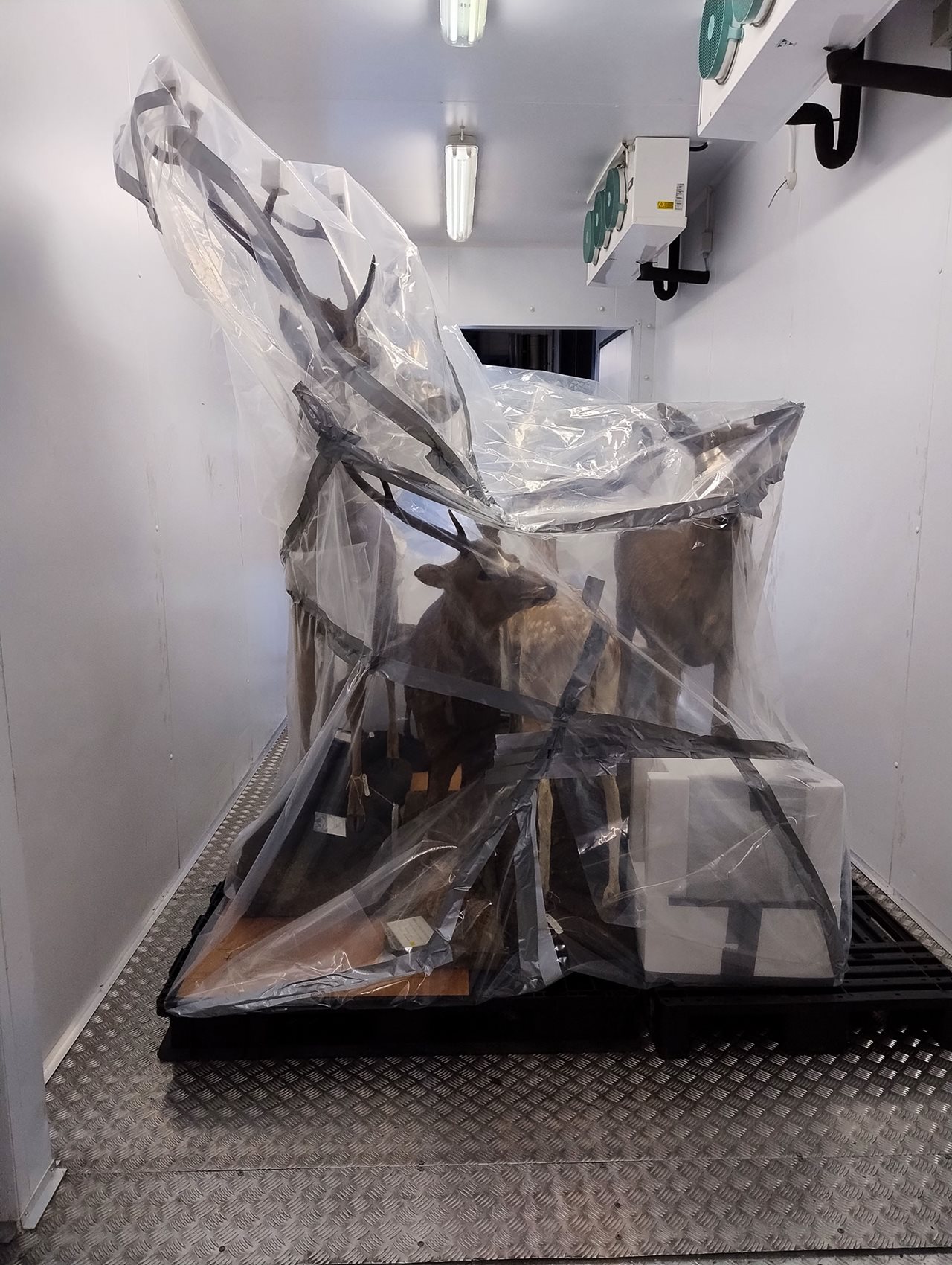
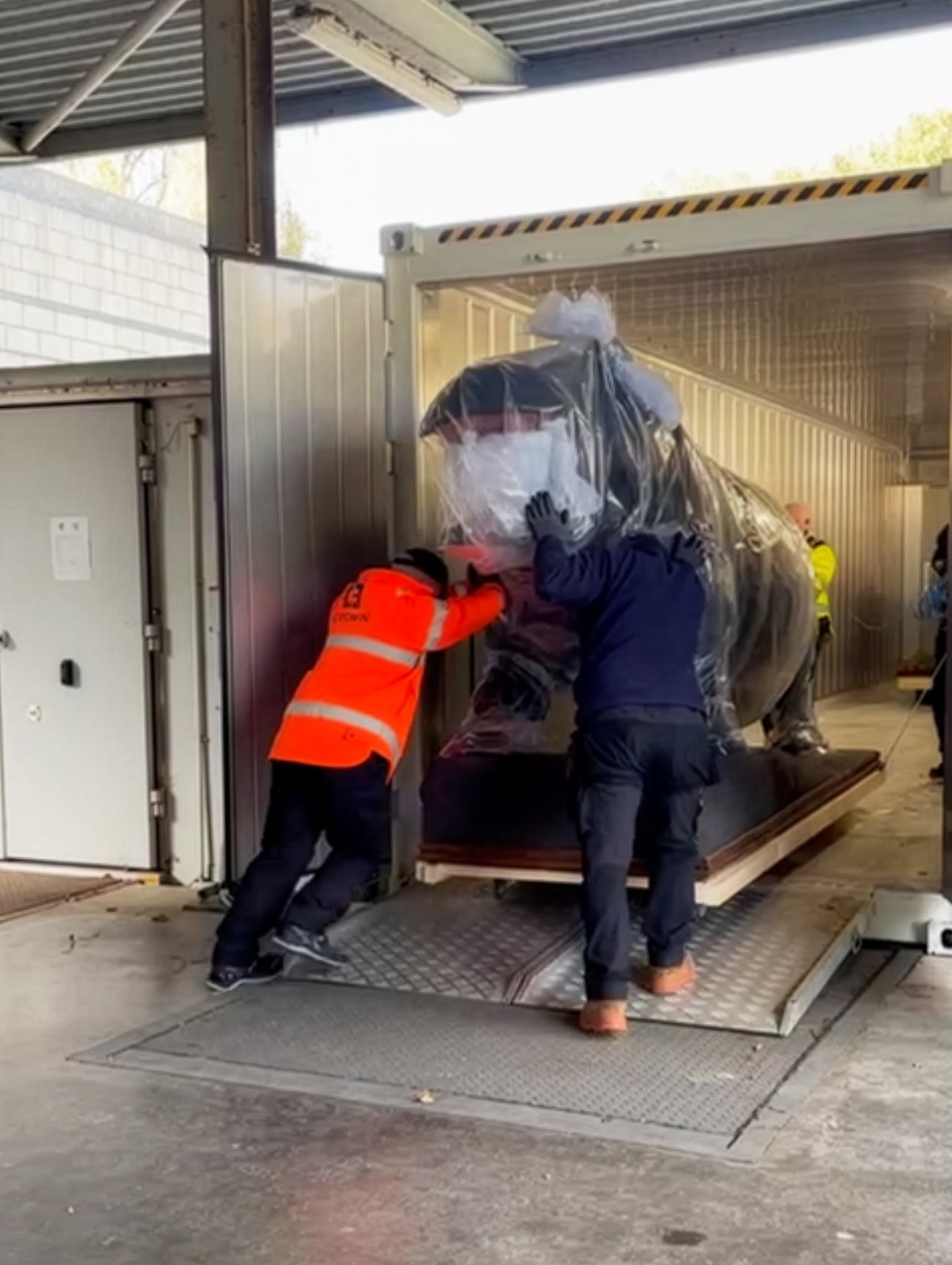
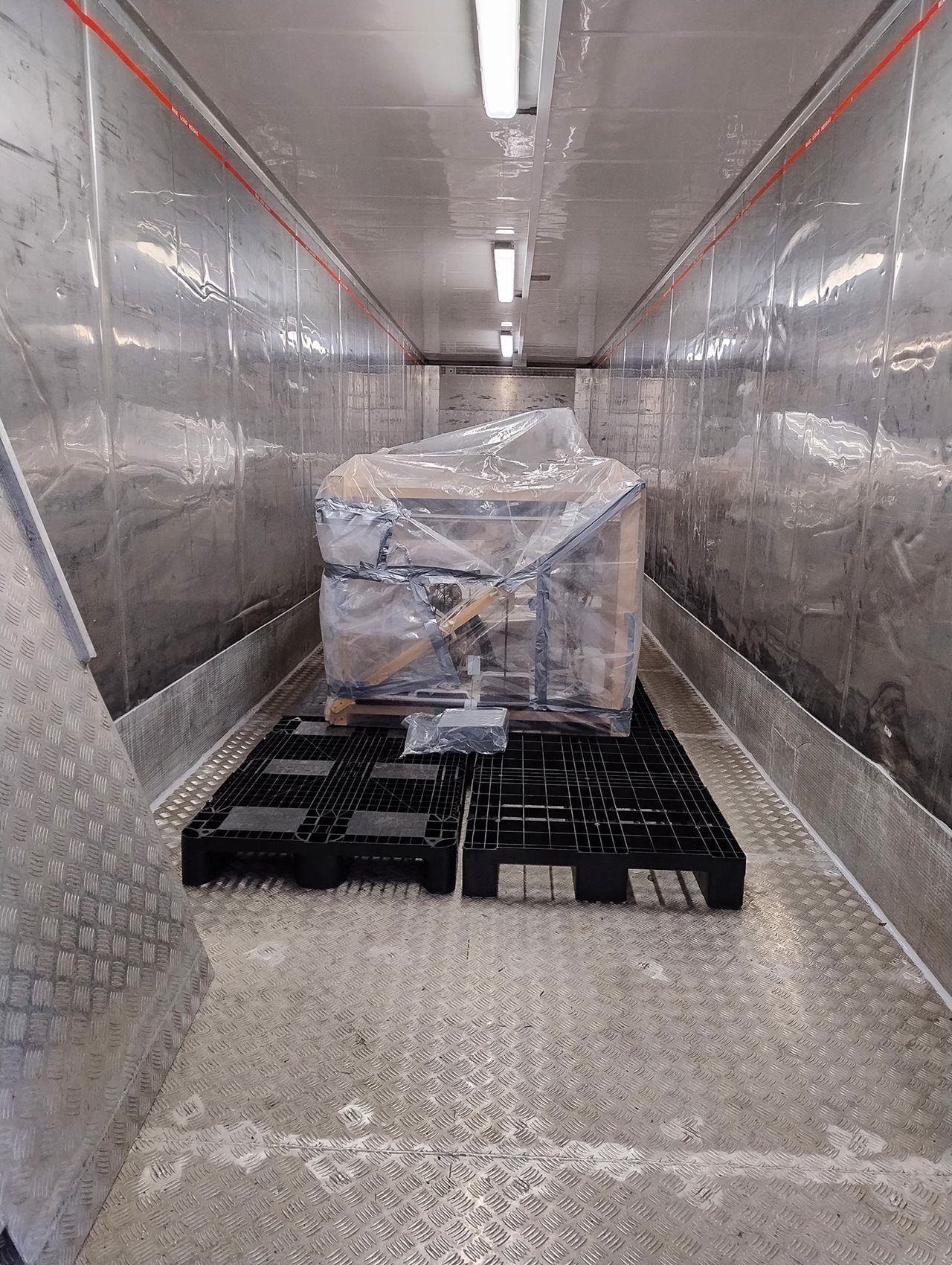
We have all on occasion had difficulty fitting our weekly shop into our fridge freezer, so how did we manage to fit our large taxidermy like our hippos, bison, and bears into a freezer? The answer was three large industrial grade freezers. If you have worked in a hotel or supermarket, these are the container sized units which are used for food storage. But even these units do not have unlimited space. For each move, we had to make sure that the objects due to be moved would fit in the freezers available. The planning for each move was essentially a large game of Tetris, making sure that all the animals earmarked for each move would fit in the freezer space available. And there was indeed space in the freezer for the hippo!
On arrival at in our stores, we could not just wheel the specimens into the freezer and flip a switch. All the objects had to be protected against potential water damage while in the freezer. When the freezing cycle begins, it cools the water in the air. This water forms condensation on the sides and ceiling of the freezer, before eventually freezing in place. As the temperature returns to room temperature at the end of the cycle, the water returns to a liquid, which could then drop on the specimens. To avoid any water damage, everything was wrapped in plastic sheeting. Large taxidermy was wrapped individually, while smaller objects were wrapped together in a larger parcel.
Certain materials are not suitable for freezing. The expansion and contraction that happens during freezing can put the objects under pressure, and they can crack and break. These objects were sealed in plastic and placed in a quarantine room, where they were checked periodically by Conservation staff for pest activity. When Conservation staff were happy that the object was pest free, it was moved into the store.
Teamwork
Keeping museum stores and galleries pest free requires constant effort, but it is a vital task in maintaining our collections into the future. The vigilance of the project team has ensured that the Natural History collection was moved into temporary home where they will be safety housed before their return to Merrion Street.
More Information
If you would like to see some of our Natural History collections on display, please visit Dead Zoo Lab at Collins Barracks | Decorative Arts & History | National Museum of Ireland