
The remains of a rare 3-metre-long Greenland shark (Somniosus microcephalus) has been successfully recovered from the shoreline in County Sligo, marking the first recorded stranding of this species on the Irish coast.
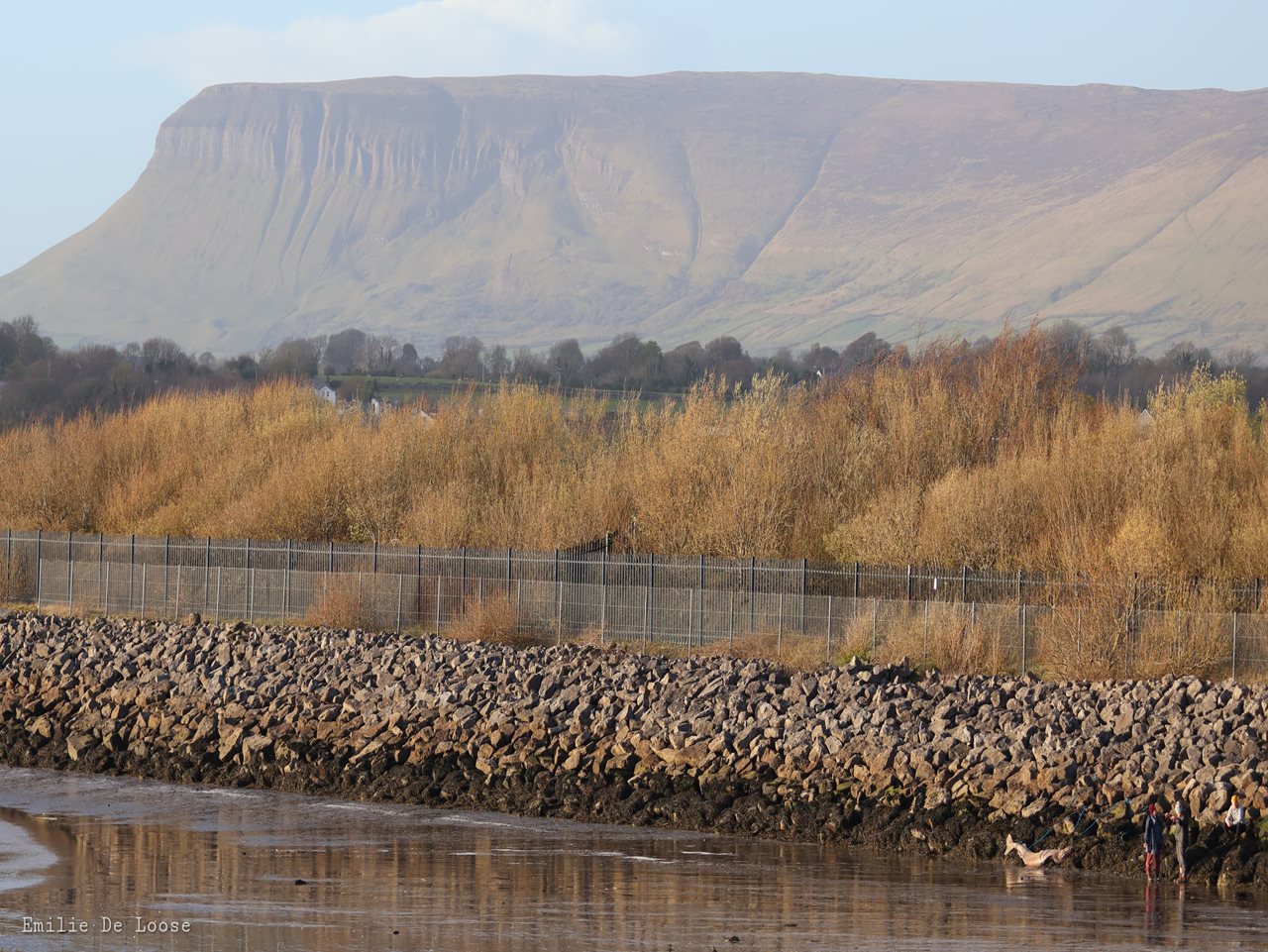 Image courtesy of Emilie De Loose, Irish Whale and Dolphin Group
The specimen was initially reported by by two teenage members of the public to the Irish Whale and Dolphin Group (IWDG), who notified the National Museum of Ireland after discovering the animal in a difficult-to-access part of the coast. Due to the challenging terrain and the threat posed by incoming tides, an urgent multi-agency response was coordinated.
The National Museum rapidly assembled a response team that included Regional Veterinary Laboratory Sligo, Department of Agriculture, Food and the Marine (DAFM), Sligo County Council, the Harbour Master, members of the IWDG, and a number of academic and independent researchers.
Given the location and condition of the shark, specialist equipment and access to private property managed by CAW was required to retrieve the specimen safely. Quinn Crane Hire lifted the animal from the shore before tidal conditions could cause further deterioration or result in the specimen being lost to the sea. The recovery operation was completed successfully and without incident.
The shark is now undergoing detailed scientific postmortem examination, contributing valuable data to the understanding of this elusive deep-water species. Tissue samples and selected anatomical components are being preserved as part of the National Museum’s scientific collections, ensuring a permanent record of this exceptional specimen.
The Greenland shark, known for its extreme longevity and deep-sea habits, is exceptionally rare in Irish waters, and this stranding represents a significant opportunity for research into its biology, health, and ecology.
Subject to the condition of the skin and its suitability for preservation, the National Museum hopes to display the specimen in the future, which would allow visitors to learn more about one of the world’s most mysterious shark species and the scientific work undertaken to study it.
The National Museum has expressed its gratitude to all partner organisations and individuals involved for their swift cooperation and expertise in preserving this nationally significant specimen.
If you have any further questions about this news please do contact us at info@museum.ie